
Skills & Expertise
I’ve spent over fifteen years in management, sales and online marketing, with the last six years focused specifically on SEO. In that time I’ve built my practice around three things: technical depth, the right tools applied correctly, and the ability to turn data into decisions a business can act on. The technical side is where I do my strongest work.
Technical SEO: Crawling, Indexing & Core Web Vitals
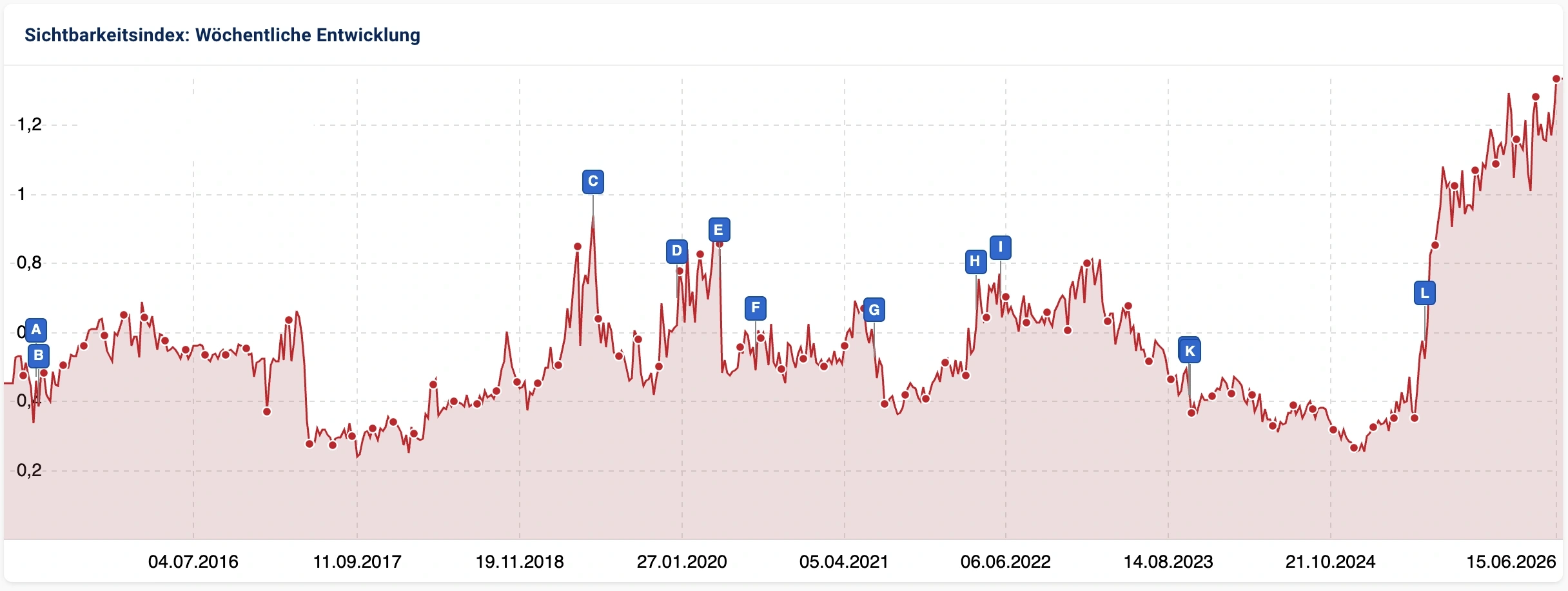
The clearest example of this work is a site I took over in a free fall – rankings dropping, visibility collapsing – that I brought to a 400% increase in its Visibility Index (source: SISTRIX). That result came from several technical workstreams running in parallel, not one single fix. Crawl budget is one problem I’ve solved repeatedly. On one site, search parameters were generating an infinite number of duplicate URLs, and Googlebot was burning its entire crawl budget on pages that shouldn’t have existed. I identified those parameter patterns and systematically excluded them from crawling, which freed up crawl capacity for the pages that actually mattered. Indexability issues are another recurring area. On the same site, a “Load More” button on the blog loaded additional articles via JavaScript on click – the links weren’t present in the initial HTML, so Googlebot couldn’t find them. I solved this with pagination, which brought hundreds of previously invisible articles back into the index.
Core Web Vitals, particularly CLS, is where I’ve done some of my most detailed diagnostic work. I’ve tracked down multiple sources of layout shift on a site: a jQuery-based sticky header applying padding via JavaScript after first render, a job board widget that expanded two seconds after load, and a slider with no reserved height. The fix in each case followed the same principle — give the browser the correct layout information from the first paint, so nothing shifts afterwards. I replaced the JavaScript logic with static CSS media queries. The result was a clear, traceable correlation: every time CWV assessments passed, rankings followed.
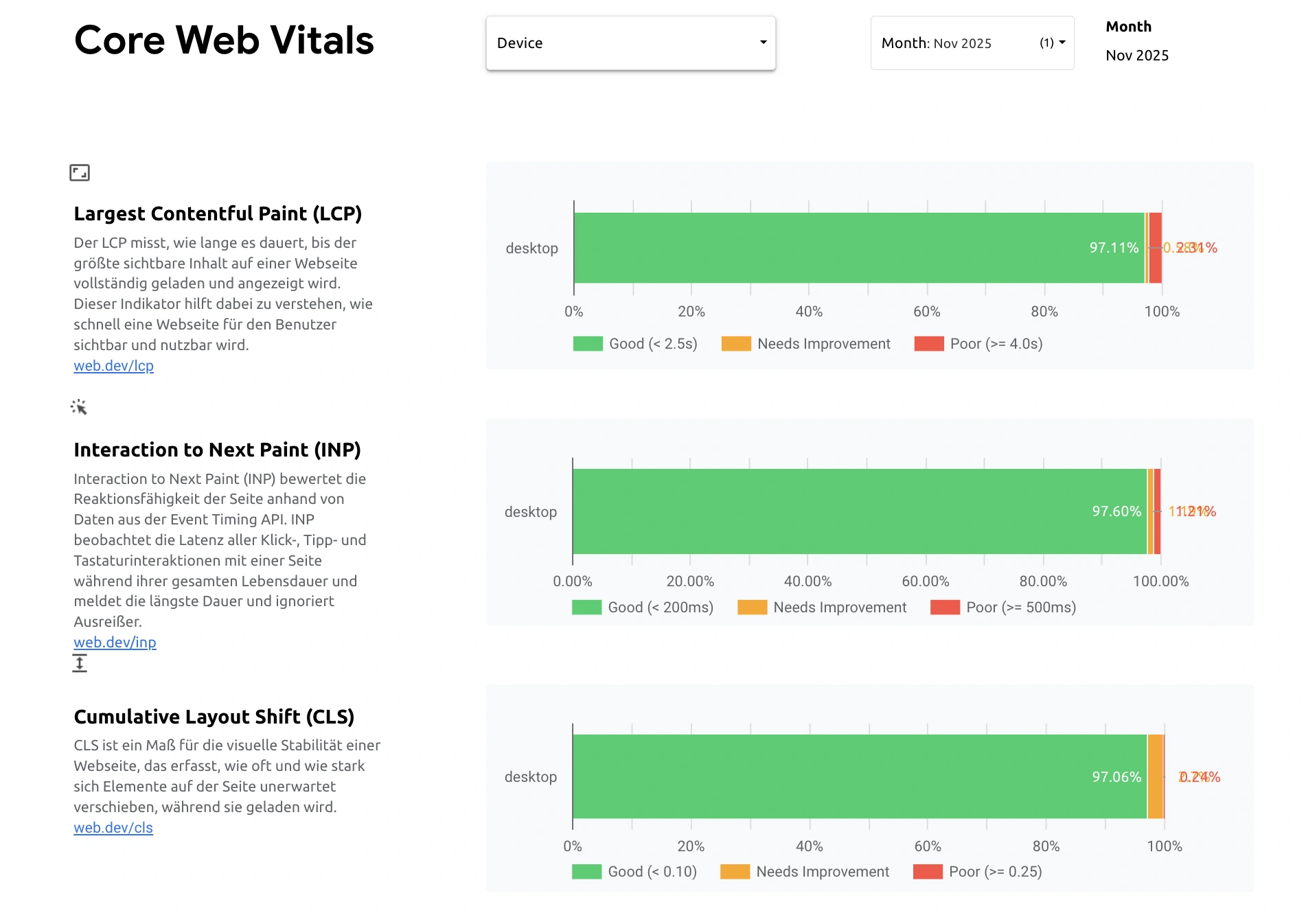
Within Core Web Vitals, I’ve also diagnosed LCP issues that weren’t about image preloading at all, but about a page builder’s CSS and JavaScript pipeline blocking paint – the kind of root cause that only surfaces when you actually read what PageSpeed Insights identifies as the LCP element, rather than working from a generic checklist.
Multilingual and multi-market technical SEO is another area I work in regularly. Managing SEO across German, French, and English markets means handling hreflang configuration and hosting setups where multiple country domains share a single CMS installation.
Monitoring & Auditing
I have advanced knowledge and skills in Screaming Frog and use it for my monthly technical monitoring – crawls that surface redirect chains, indexability issues, internal linking structure, and crawl health problems before they affect rankings. Screaming Frog gives noticeably more detailed crawl results than tools like SISTRIX’s built-in crawler, which is why it’s my primary tool for technical audits specifically.
I check indexing and crawling issues weekly in Google Search Console – coverage status, crawl stats, and query-level performance. When I find a problem, I analyse the root cause, work out a solution, and file a ticket with IT for implementation. I use a combination of Screaming Frog, GSC, and SISTRIX for Visibility Index tracking and competitive monitoring, cross-referenced with SE Ranking for rank tracking across the markets and domains I manage. Google Keyword Planner supports keyword research and content briefing. Pagespeed and Core Web Vitals checks are a standing part of my weekly technical reviews, alongside implementing structured data and schema markup.
Analytics, Tracking & Reporting
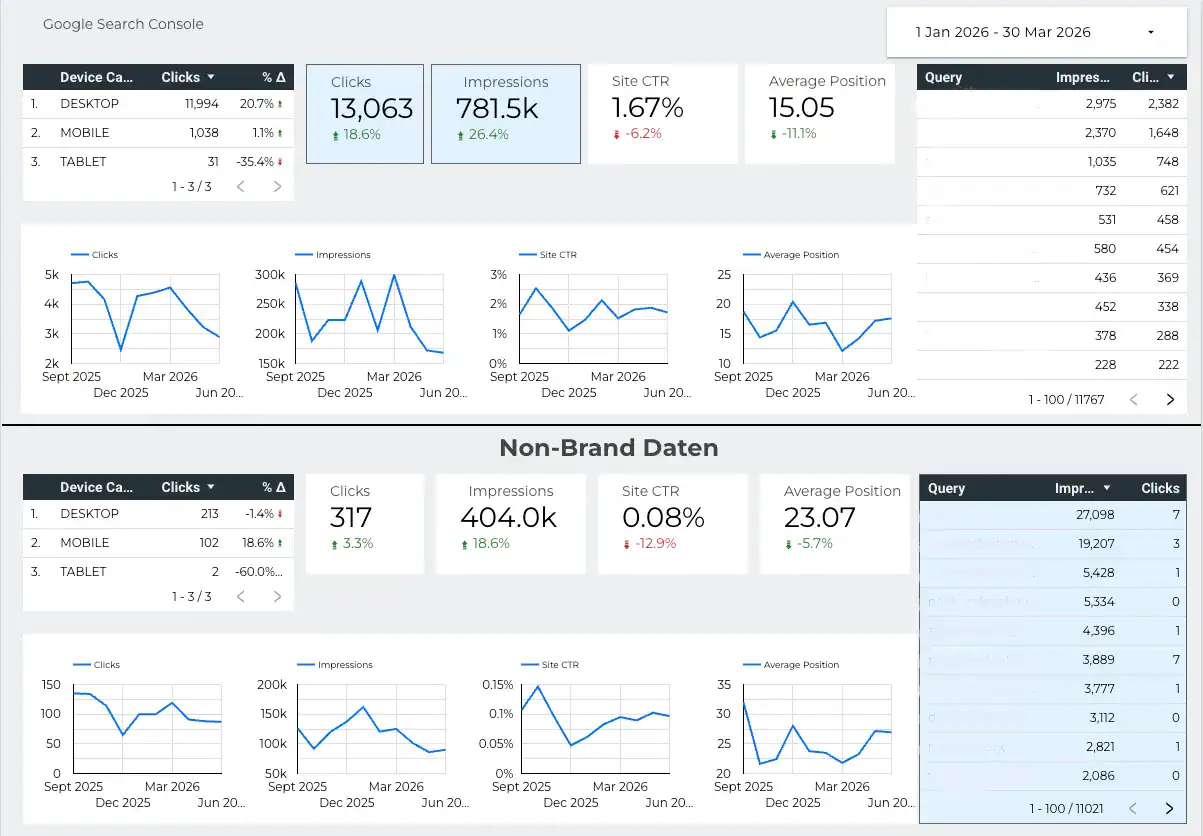
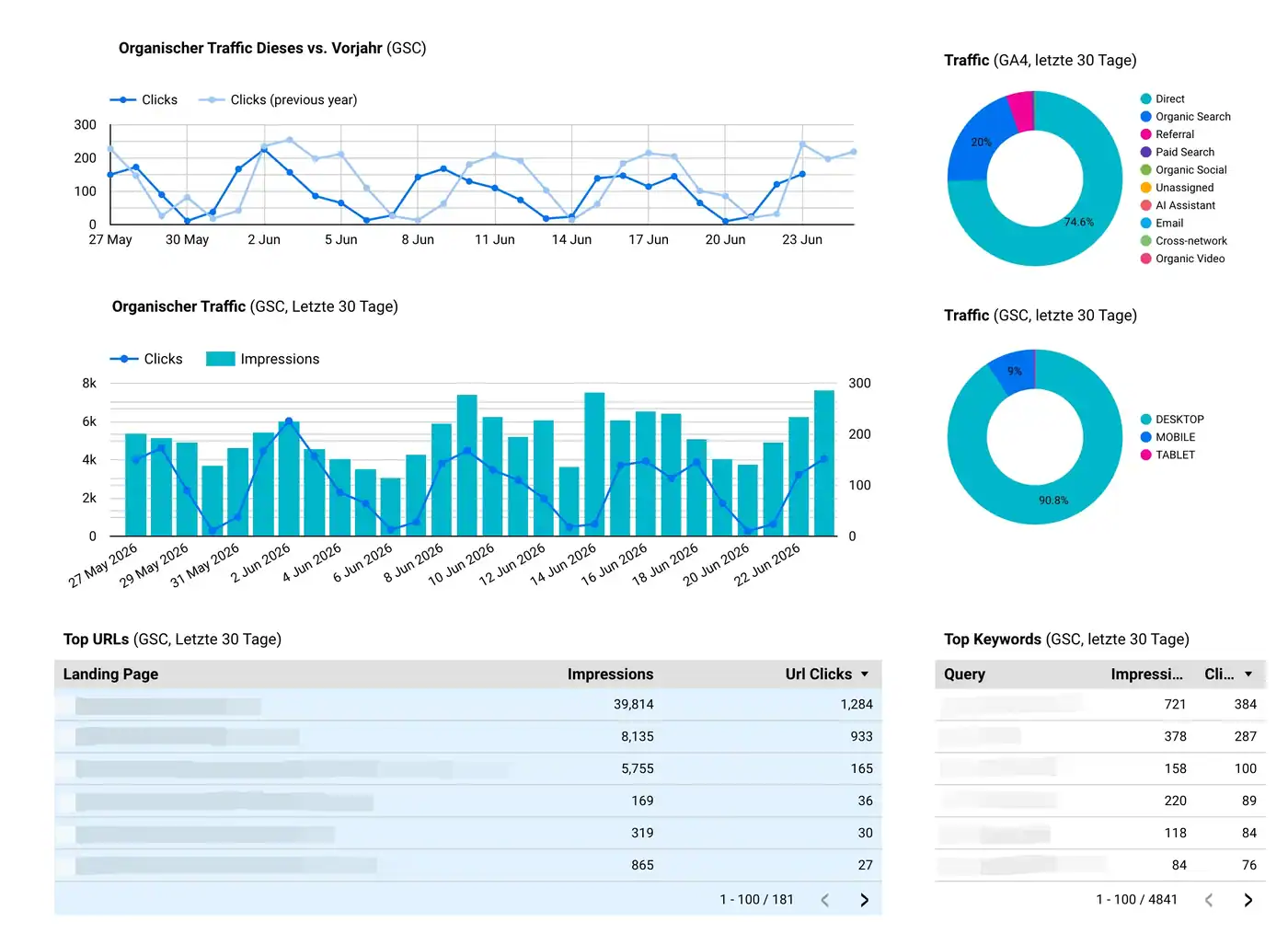
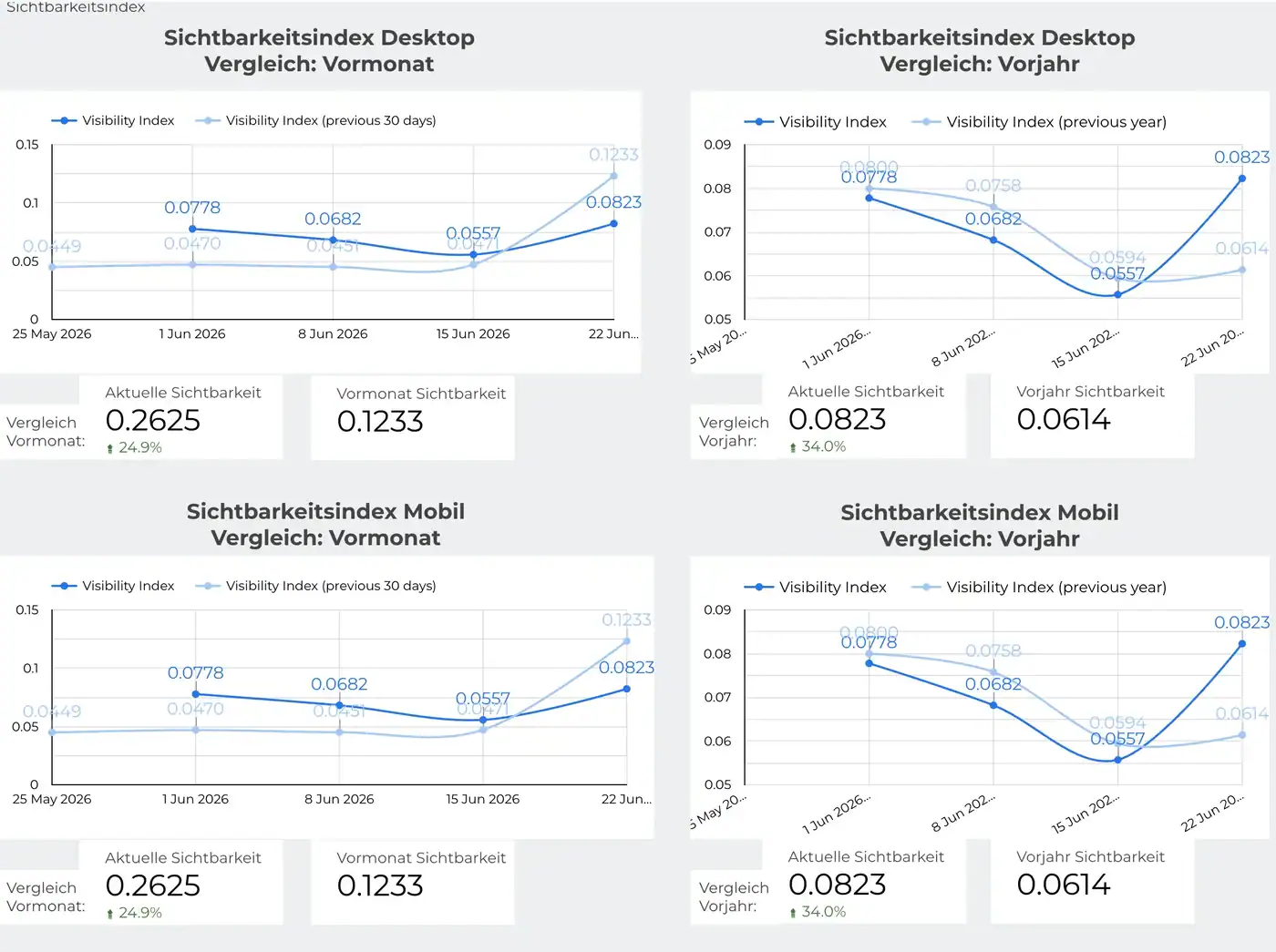
I use Google Tag Manager combined with GA4 to set up complex tracking, then visualise the results in Looker Studio. The three work together as a pipeline: GTM collects, GA4 processes and stores, Looker Studio visualises. I set up and manage tracking rules directly inside GTM, then connect them to GA4. GA4 receives that event data, attributes it to campaigns, locations, and devices, and stores it as structured historical data. Looker Studio is where that data becomes usable for reporting.
Since GA4 can’t blend data from multiple sources, I connect Looker Studio directly to GA4, GSC, and SE Ranking to build dashboards – including a dedicated SEO dashboard – that bring these sources together in one place, producing reports that update automatically instead of being rebuilt by hand every month.
UX & Design
My Google UX Design certification taught me a deeper, more structured understanding of user behaviour – not just usability conventions, but the reasoning behind why a user does what they do on a page. I use Figma to collaborate on design changes before they ship, Hotjar for heatmaps and session recordings to see how people actually behave on a page, and WordPress as my primary CMS.
Automation & AI-Supported Workflows
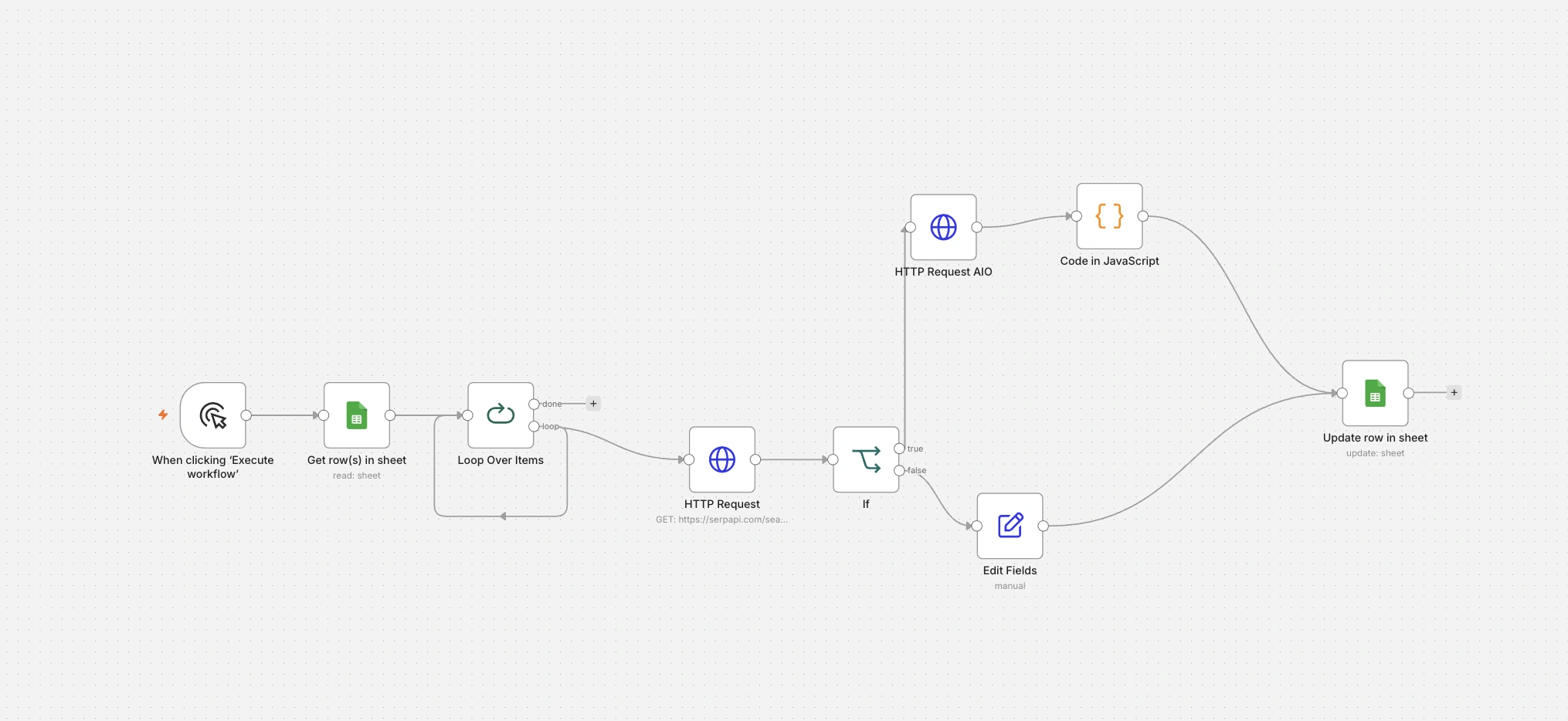
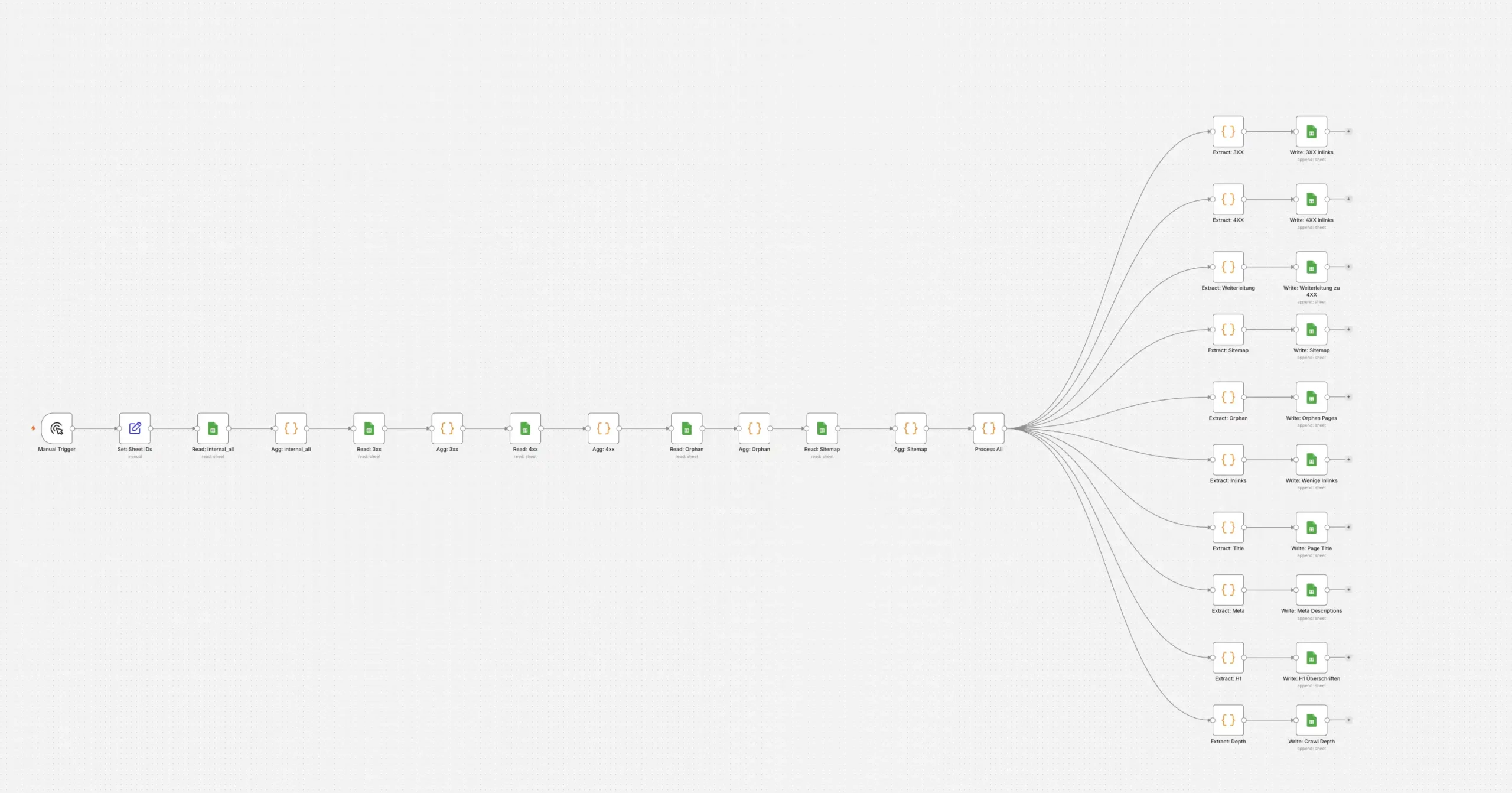
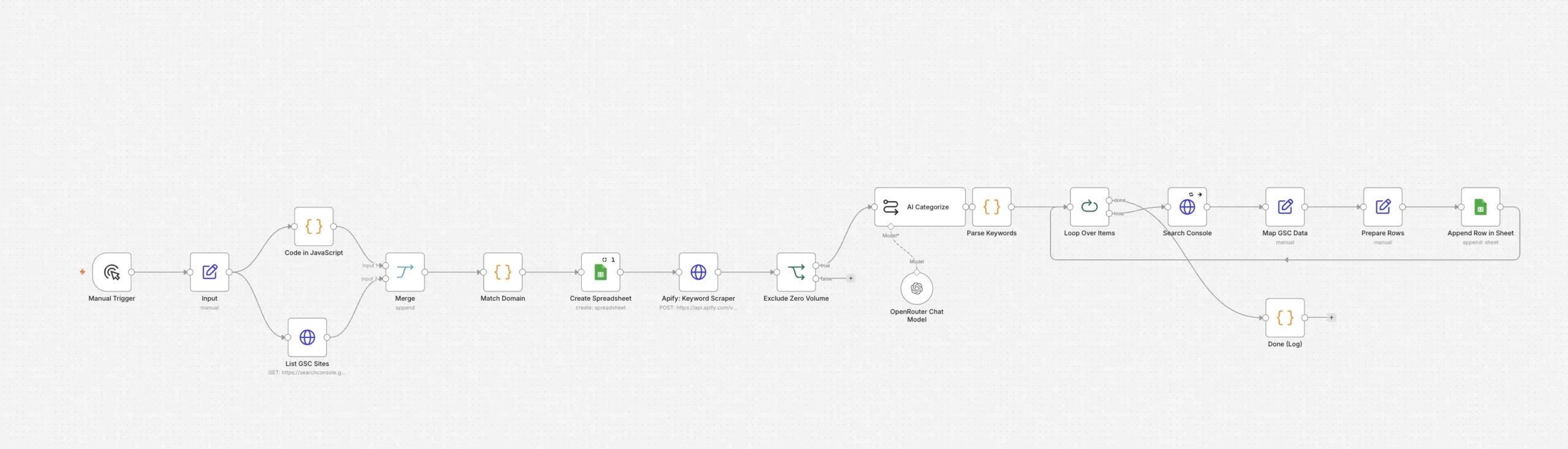
I automate recurring SEO processes – keyword research, bulk SERP scraping, technical monitoring, reporting, and data evaluation – using n8n, to use working time more efficiently instead of repeating manual tasks. I use Claude alongside my prompt engineering skills as working tools throughout my process, from technical audits to content briefings.
Organisation & Project Management
I work as an SEO Project manager as much as an SEO Manager, planning and coordinating SEO work across a wide portfolio of sites. I’m a verified ClickUp Power User, and it’s the system I rely on to manage that workload.
Strategy & Areas of Expertise
- Developing and implementing complex SEO, GEO, and AI-search strategies
- UX design and conversion optimisation
- Content and keyword strategy
- Technical SEO audits and data analysis
- AI-driven SEO
- Website relaunches and migrations
- Lead
- Organise
- Implement
- Monitor end to end
Where This Is Heading The same technical foundations described above – clean crawlability, fast and stable rendering, topical authority, and structured data for AI-driven search – are increasingly what determines whether AI systems retrieve and cite a website, not just how it ranks in traditional search. That’s covered in full on the dedicated GEO, AIO, and LLM optimisation website.